
Parallel Axle
Showing all 2 results
-
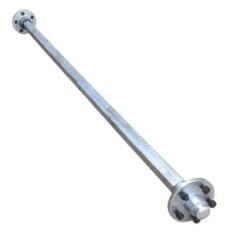


50mm Square Galvanised Lazy Axle
Price range: $566.30 through $743.15 Inc.GSTSelect options This product has multiple variants. The options may be chosen on the product page Available on backorder -
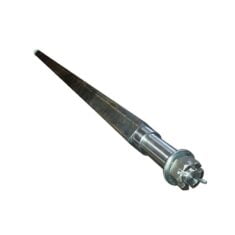
45mm Square Parallel Axle
Price range: $182.00 through $333.00 Inc.GSTSelect options This product has multiple variants. The options may be chosen on the product page In stock
Caravan Parallel Axle
A caravan with parallel axles (also known as a dual or tandem axle caravan) features two axles with four wheels, offering enhanced stability and a higher load capacity compared to single-axle caravans.
The term “parallel” also refers to the machining profile of the axle stub, where the inner and outer wheel bearings are the same size for a more robust build.
Key Characteristics and Benefits
Enhanced Stability: The dual-axle design provides a larger footprint and better weight distribution, significantly improving stability on the road, especially at highway speeds, in crosswinds, and on uneven surfaces.
Increased Load Capacity: With the weight distributed across four wheels and two axles, the caravan can safely handle heavier loads and more amenities, making it ideal for families or long-distance touring.
Safety Redundancy: In the event of a tyre blowout, the other tyres help support the load and maintain control, making a sudden failure less catastrophic than with a single-axle caravan.
Smoother Ride: The dual suspension system absorbs bumps and undulations more effectively, providing a smoother towing experience and less bounce.
Disadvantages
Higher Costs: Dual-axle caravans typically have a higher initial purchase price and increased maintenance costs due to having more tyres, brakes, and bearings to service.
Axle Components
The term “parallel” is often used in the context of the bearing set configuration.
Parallel Bearing Profile: This configuration uses inner and outer tapered roller bearings of the same size (e.g., Ford bearings, L68149 inner and outer). This design is robust and commonly used on caravans and trailers up to 1600kg, according to Couplemate Products.
Slimline Bearing Profile: This configuration uses a smaller outer bearing than the inner bearing.
Considering the trade-offs, the choice depends on your travel plans and towing capacity. Would you like to see specific examples of dual-axle caravans, or perhaps explore single-axle options?