
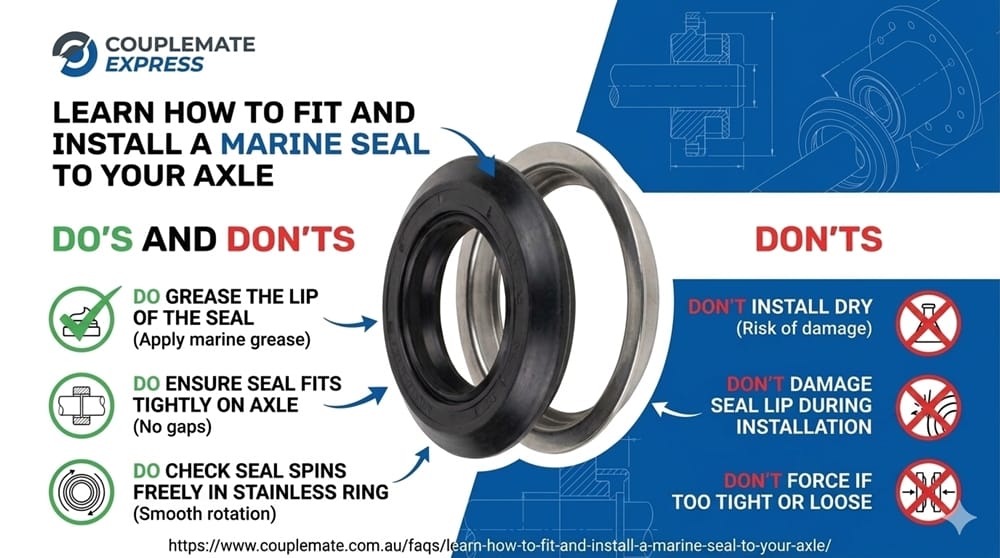
Marine Axle Seals & Boat Trailer Tips: Step-by-Step Installation
Summary
Protect your boat trailer from costly wheel-bearing failures by mastering marine axle seal installation. This guide covers how to correctly grease, seal, and fit marine-specific bearing kits to prevent water ingress and ensure smooth towing on your next boat-ramp launch.
Description
Saltwater exposure is the ultimate enemy of boat trailer bearings. In this comprehensive guide, Steve breaks down the exact step-by-step procedure required to install new marine bearing seals correctly. Standard highway seals can’t handle submersion, allowing water to mix with your grease and corrode your bearings. Learn how marine-specific seals use an innovative stationary design and stainless steel components to create an absolute watertight barrier, ensuring long-haul reliability for your trailer.
Video Tutorial
Key Features
- Water Ingress Prevention: Engineered specifically to withstand complete submersion during boat launches.
- Two-Part Mechanical Barrier: Features a specialised design in which the outer stainless-steel ring locks into the hub, while the rubber inner seal remains stationary on the axle journal.
- Corrosion Resistance: Heavy-duty stainless steel components prevent rust and premature seal degradation.
- Reduced Friction Drag: Dual-lip rubber sealing surfaces optimised for high-temperature grease retention.
Specifications
| Component / Metric | Specification Details |
|---|---|
| Seal Type | Marine Mechanical Two-Piece Sealing System |
| Material | Premium Nitrile Rubber with Stainless Steel Outer Ring |
| Compatibility | Standard marine hubs, disc rotors, and trailer axle journals |
| Recommended Lubricant | High-temperature, water-resistant marine wheel bearing grease |
How to Install a Marine Seal
- Tap the Ring: Carefully drive the outer stainless ring into the rear bearing boss of your hub.
- Prep the Axle: Smear a thin, even layer of marine silicone onto the axle seal surface.
- Lubricate the Lips: Apply a liberal amount of marine grease into the seal lips to drastically reduce initial friction drag.
- Seat the Seal: Slide and insert the rubber seal onto the silicone-smeared axle journal.
- Final Assembly: Insert the hub or disc rotor, seat the bearings, and lock it firmly with the axle nut.
Frequently Asked Questions
Q: What is the difference between a marine seal and a standard seal?
A: A standard highway seal is affixed to the inside of the wheel hub and spins rapidly with the hub itself. In contrast, a marine seal is securely affixed to the axle journal and remains stationary. It utilises an accompanying stainless steel outer ring inside the hub boss to enable the rubber seal to function effectively without spinning on the raw metal, creating a vastly superior watertight barrier.
Q: Why do I need to use marine silicone during installation?
A: Marine silicone acts as both a lubricant during initial placement and a permanent waterproofing adhesive once cured. It ensures water cannot sneak underneath the rubber seal base along the axle surface.
Helpful Resources & Links
Government Authorities & Safety Standards
- Australian National Standard for Light Trailers (VSB1)
- Queensland Transport and Main Roads Light Vehicle Standards
0 Comments