

New Caravan and its Weighbridge Certificate
A weighbridge certificate should be the first thing you do when buying a new or used Caravan. There are many pitfalls when buying a caravan; this certificate gives you the facts instead of the rhetoric.
A weighbridge certificate gives you certainty that the nameplate on your chassis rail is correct, and the dealer has given you correct information.
Buying a new caravan should be a breeze, but hidden pitfalls can catch you off guard.
I hear complaints from caravan owners that dealers and manufacturers may be using inferior springs in rigs that break down reasonably quickly after delivery.
Wrong springs, underrated springs, imported springs are the popular and apparent culprits – but are they?
Weighbridge Stations Australia PDF File
Tow Ball Scales
Ensuring you have safe rig statistics with a weighbridge certificate and a set of towball scales.
Tow ball scales tell you that your rig’s loading is either perfect or needs adjusting.
Measure your tow ball weight empty. It should be within 8% to 10% of the amount on your ATM receipt, as indicated on your VIN plate.
After loading your caravan, this tow ball weight should not differ significantly. Most of your load will be on your axles, with only 10% or less.
The danger is that too little weight will cause you to sway on the highway. Conversely, too much weight will cause your tow vehicle to sag in the rear, resulting in light steering.
Especially relevant is wastewater and freshwater loads and how they affect your towing. So take your tow ball scales with you.
A tow ball scale should be a constant companion to check your loadings before setting off.
Caravan springs generally break for four reasons
- Uneven tension on the fish plate causes breakage on the centre bolt.
- Overloaded rigs and shock loading can damage the spring near the eye.
- Wrong spring manufacturer, not as standard as you think. Springs are made in large batches, so if one spring breaks, then hundreds of springs break.
- If the U-bolt is not re-tensioned beforehand, a long trip can cause it to break and cause the spring to be ripped out of its mount or cause spring breakages.
The wrong hanger location can also cause spring problems.
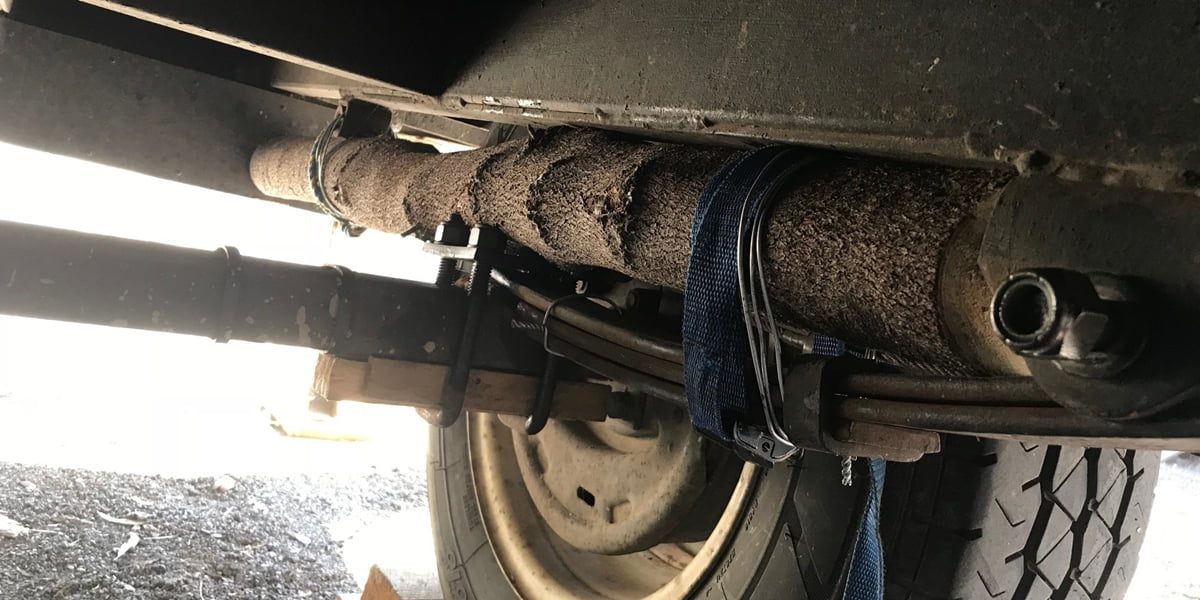
After loading their caravan and driving it over a weighbridge, I suspect many proud owners will be surprised.
While it can be challenging to know what to inspect when taking delivery of new caravans, one essential thing to ask for is the weighbridge certificate.
The manufacturer may have a certificate for your specific type of caravan, but it may not have one for all new caravans produced.
If your weighbridge certificate equals your VIN plate, then you are in trouble. What about food, clothes, spares, and camping gear you need to load up for your trip?
 When buying new caravans, I recommend asking for a current weighbridge certificate to be included as part of the pre-delivery process.
Your weighbridge certificate is your safety guarantee issued by an independent, third-party, certified inspection station.
In my opinion, many cases of spring breakages are caused by cheap U-bolts that are untested and are not fit for use.
Used Caravans
FIT FOR USE – what does it mean?
- The weighbridge certificate is one of the most critical documents you need to assess your caravan.
- Check the weighbridge certificate against your VIN plate.
- If the VIN plate ATM is lighter than your weighbridge certificate, you need to take your caravan to your local caravan service centre for a checkup.
- Your mechanic may recommend a spring upgrade, an axle upgrade or a u-bolt upgrade to help make your rig safe.
- It would help if you asked your repairer or manufacturer about the VIN plate upgrade. Some caravans no longer have a manufacturer available for advice, so ask your local caravan bloke.
- We would recommend replacing all nuts with nylocks. Vibration fatigue can catch the unwary. Please read about it here.
- Check U-bolts, shackle bolts and bushes for wear before they cause an accident.
- Check and adjust the bearings, and inspect for black grease. If you find black lubricant, beware – the black in the lubricant is carbon black, and your bearings are close to failure. The colour of your grease tells the story.
- We recommend checking gas lines for leaks and loose nuts.
- Check your shock absorbers to ensure they are fully functional. For more information, refer to the article on shock absorbers.
- Check your tyres on corrugated roads and lower the tyre pressure to absorb energy more effectively at lower speeds. Re-pressure your caravan tyre once back on the road.
- UV can degrade your electric cabling; check your cable for the entire length of your caravan. Replace if UV degradation is evident.
- Your coupling may be loose on your tow ball. Check the adjustment.
- Adjust the park brake adjuster properly.
- Check that your brake shoes are adjusted well.
- Finally, check that your tow ball weight is around 8% of your ATM.
The above are a few things I check before hitting the highway.
About to fit a 3 ton roller rocker to this van and also upgrade its axles as it originally had slimline bearings on a 50mm axle